PVD-coated bathroom hardware is marketed as a premium finish. Here is what that means in practice — the chemistry, the testing, and the reason we decommissioned our electroplating line three years ago.
Physical vapour deposition is a vacuum process. The part to be coated — a basin mixer body, a shower head, a towel rail bracket — is placed in a chamber. The chamber is evacuated to approximately one ten-millionth of atmospheric pressure. A target material — titanium, zirconium, chromium, or an alloy — is vaporised by a high-energy plasma. The vapour travels across the vacuum and deposits on the part as a film between 2 and 5 microns thick.
The result is a coating that is harder than the substrate, bonded at the atomic level, and immune to the humidity and chemical exposure of a bathroom environment. The colour — matte black, brushed gold, brushed nickel, rose gold, gunmetal, or any of the eighteen finishes we currently produce — comes from the target material composition and the reactive gas introduced during deposition.
Why We Moved Away From Electroplating
Electroplating works by passing an electric current through a plating solution — chromic acid and sulphate compounds for chrome, cyanide compounds for gold and nickel. The process is well understood and produces a good cosmetic result. It also produces effluent that requires careful treatment and generates hexavalent chromium as a byproduct — a compound that is toxic, carcinogenic, and increasingly regulated in export markets.
We had an electroplating line at Xiamen until 2022. We decommissioned it not because regulators forced us to, but because the environmental management system we were building toward ISO 14001 made it the rational decision. The capital cost of the PVD chambers was higher than extending the electroplating operation. The operating cost is lower. The effluent load is lower. The finish quality is better.
Hardness Comparison
Electroplated chrome: approximately 500–1,000 HV (Vickers hardness).
PVD titanium nitride: approximately 2,300 HV.
PVD zirconium nitride (our matte black): approximately 2,000 HV.
In practice, this means a PVD finish does not scratch when you drag a key across it, does not tarnish in the presence of steam and soap residue, and does not flake or peel at adhesion failures the way a plated finish can when the substrate is stressed.
Our Testing Protocol
Every batch of PVD-coated hardware is tested as follows before shipment:
- 240-hour salt-spray test (ASTM B117) — no visible corrosion or adhesion failure accepted
- Cass test (copper-accelerated acetic acid salt spray, ASTM B368) — 24 hours minimum
- Pencil hardness test — minimum 6H on the coating surface
- Cross-cut adhesion test (ISO 2409) — Classification 0 (no flaking) required
- Colour consistency measurement — ΔE less than 1.0 against master sample
The 240-hour salt-spray test is the one that matters most for bathroom applications. Salt spray is an accelerated simulation of the chloride exposure a fitting experiences in a coastal or swimming-pool environment. A fitting that passes 240 hours typically performs correctly for fifteen to twenty years in a domestic bathroom, longer in a non-coastal installation.
What The Finish Options Actually Mean
We produce eighteen PVD finishes. For a project specifier, the practical choice is between four families:
- Chrome and chrome-effect: Closest to electroplated chrome visually, highest reflectivity. Use where a traditional look is required.
- Brushed nickel and gunmetal: Lower reflectivity, more forgiving of water marks. Popular in minimalist residential specifications.
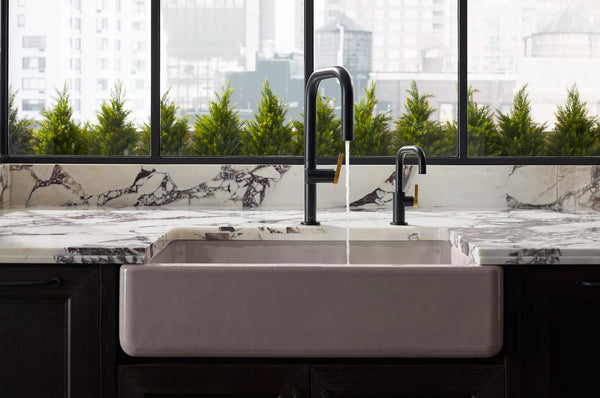
- Matte black: Zirconium nitride base, zero reflectivity. Requires a matching drain waste or the contrast becomes a specification problem.
- Brushed gold and rose gold: Titanium nitride base. Warm tonality. Specify carefully against grout and tile — the wrong combination is difficult to photograph and impossible to un-specify.
If you are specifying a project and need sample tiles to compare finishes against material boards, our export desk can ship a sample pack anywhere in the world. Ask for the PVD Sample Pack — six 100 mm × 50 mm finish tiles, one of each family.