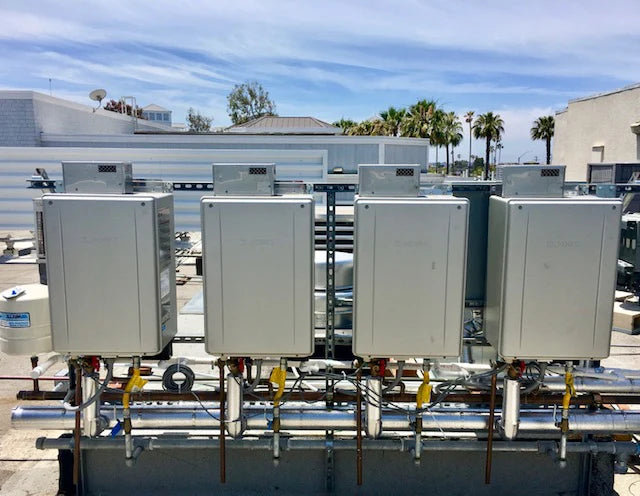
Four new five-axis CNC machining centres came online this month, taking our brass cartridge tolerance from ±0.05 mm to ±0.02 mm — and bringing our rejection rate at the leak-test bench to under 0.3%.
Precision machining in sanitary ware is an unglamorous subject. The industry does not hold conferences about tolerances. But the gap between a ceramic disc cartridge that lasts 500,000 cycles and one that fails at 80,000 is almost always a gap measured in hundredths of a millimetre — in the flatness of the disc seat, the concentricity of the spindle bore, the consistency of the cartridge body that the disc presses against.
We have been running ±0.05 mm tolerances on brass cartridge bodies since 2021. For most applications, this is fine. But as we move further into high-specification hospitality and commercial projects — buildings with strict water-pressure variation, clients with ten-year maintenance contracts — we needed to get tighter.
The New Equipment
The four centres are Fanuc-controlled five-axis machines with 12,000 RPM spindles and automatic tool-change systems that cycle every 90 seconds. They run 24 hours a day on two shifts, with a night-mode program that handles large batch runs of standard cartridge bodies while the day shift does setup changes for custom specifications.
What Five-Axis Means On A Bathroom Fitting
A standard CNC machine moves in three axes — X, Y, Z. A five-axis machine also rotates the workpiece (A and B axes), which means a complex shape like a thermostatic cartridge body can be machined in a single setup rather than repositioned four times. Each repositioning introduces a small error. Eliminating repositioning eliminates those errors. That is why the tolerance number went from 0.05 to 0.02.
Rejection Rate Impact
In the twelve months before the new cells came online, our leak-test rejection rate at the assembly stage averaged 0.87%. In the six weeks since, it has averaged 0.28%. We are not claiming the new machines are the only reason — we also revised our incoming-material inspection for brass rod, which identified a batch variance we had been absorbing into our QC process. But the majority of the improvement is the tolerance gain.
What This Means For Partners
The practical outcome for a project specifier or distributor is straightforward: fewer field callbacks. A cartridge that machines to tighter tolerances leaks less in service, wears more evenly, and reaches the rated cycle count more reliably. We are not raising prices on our standard range as a result of this investment. The cost of the new equipment is a capital decision; the benefit is a quality decision.
- All ceramic disc cartridges manufactured from April 2026 onward carry the new ±0.02 mm specification.
- Thermostatic valve cartridges follow in Q3 2026 when the specialist tooling is ready.
- Existing stock, manufactured to the previous tolerance, remains fully compliant with all certifications.
We will publish updated test data in our Q2 2026 technical bulletin. If you have specific questions about the specification change for an ongoing project, contact our export technical desk directly.